24
skills, loaded per task
A private AI second brain: 24 skills, persistent memory, and a team of agents wired into Slack, Gmail and HubSpot that draft everything and send nothing. I hold the only send key, and I use it every day.
Five products in a year, solo, means the operations of a small studio land on one person: research, notes, follow-ups, repo issues, client threads. fredis carries that load. It holds research, notes and decisions across sessions, so nothing resets between working days.
An assistant earns trust through what it is not allowed to do. Every agent in fredis drafts; none of them sends. Ownership of every outbound word, commit and deal stays with me.
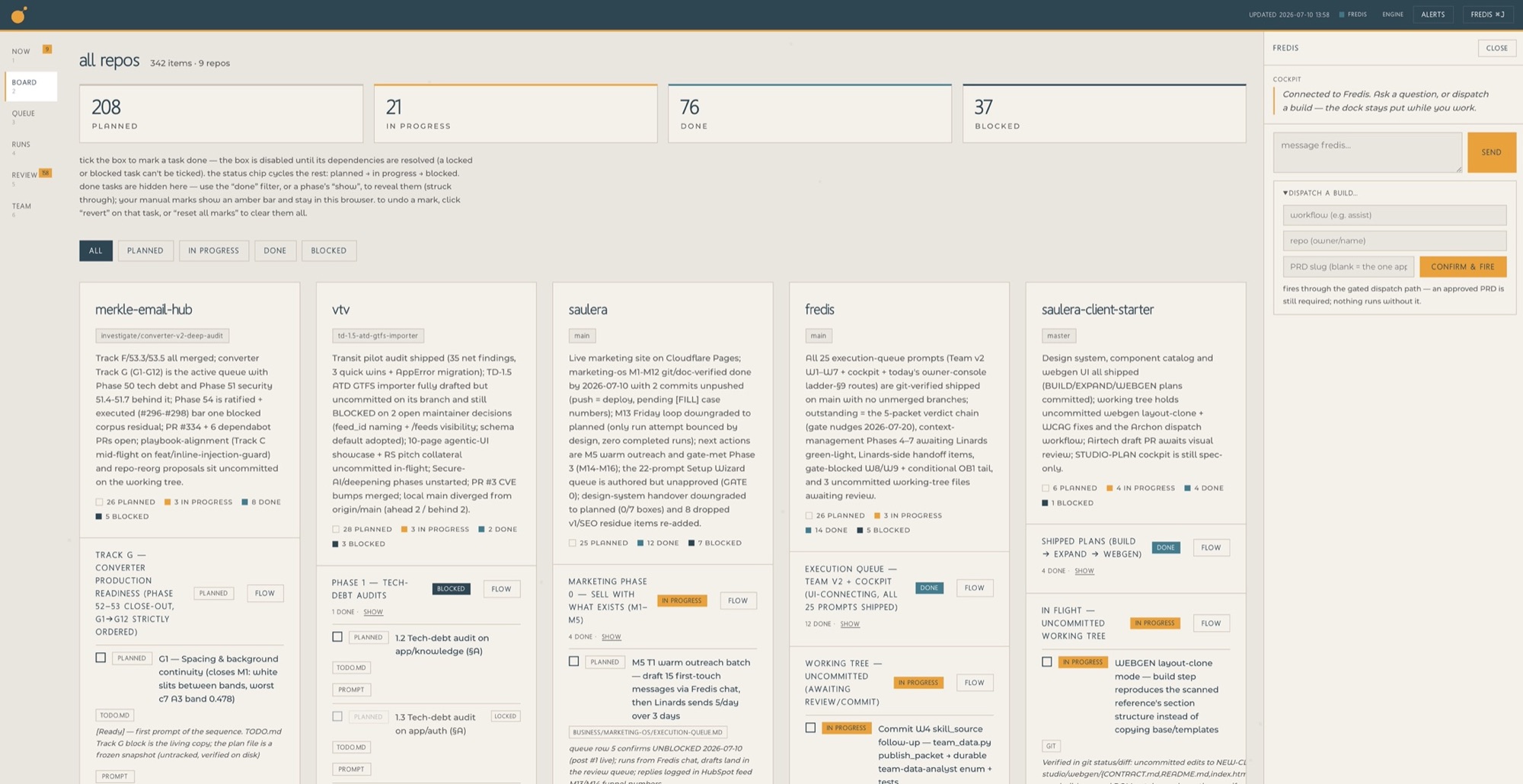
The PA, sales and marketing agents prepare replies, follow-ups and outreach inside Slack, Gmail and HubSpot, and stop there. The send is mine. This is the rule every client product in this portfolio inherited: the AI advises, a person decides.
Builds fire through a gated dispatch path: an approved PRD first, one headless session at a time, and the work arrives as a reviewable draft rather than an applied change. A diff is a proposal; a deploy is a decision.
Each advisor on the roster has a rung that sets how much it may do alone: per-action approval for the researcher, packet-writes only for the PA. The run history keeps every run with its cost, including the failed ones.
Twenty-four skills load by task, so the assistant works from written-down process. When a way of working improves, the skill is edited once and every later session inherits it.
Research, notes and decisions persist across sessions. An assistant that forgets yesterday is a search box; one that remembers is an advisor.
Every pattern the other four products ship was proven here first, on my own work, where a failure costs me an afternoon instead of costing a client.
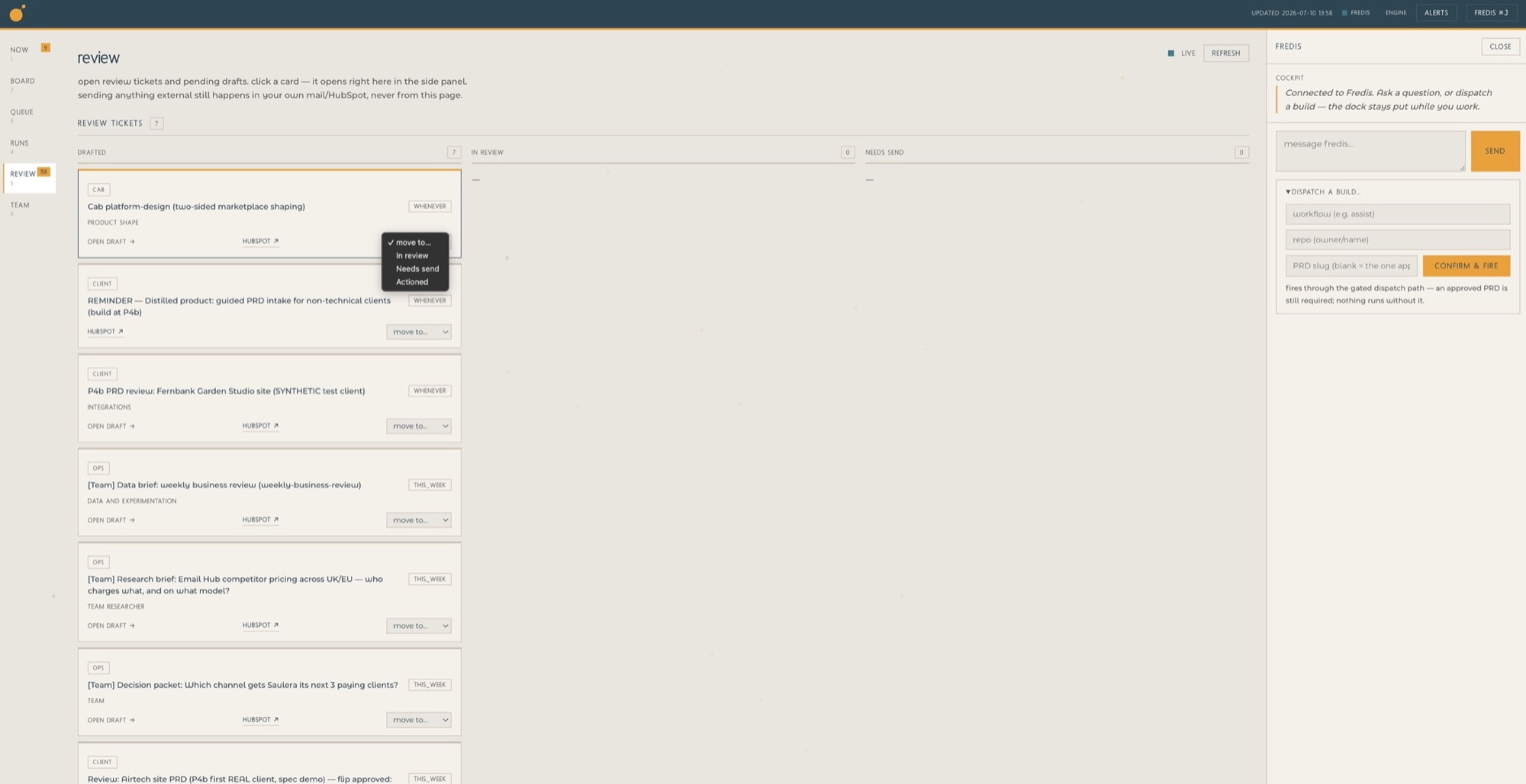
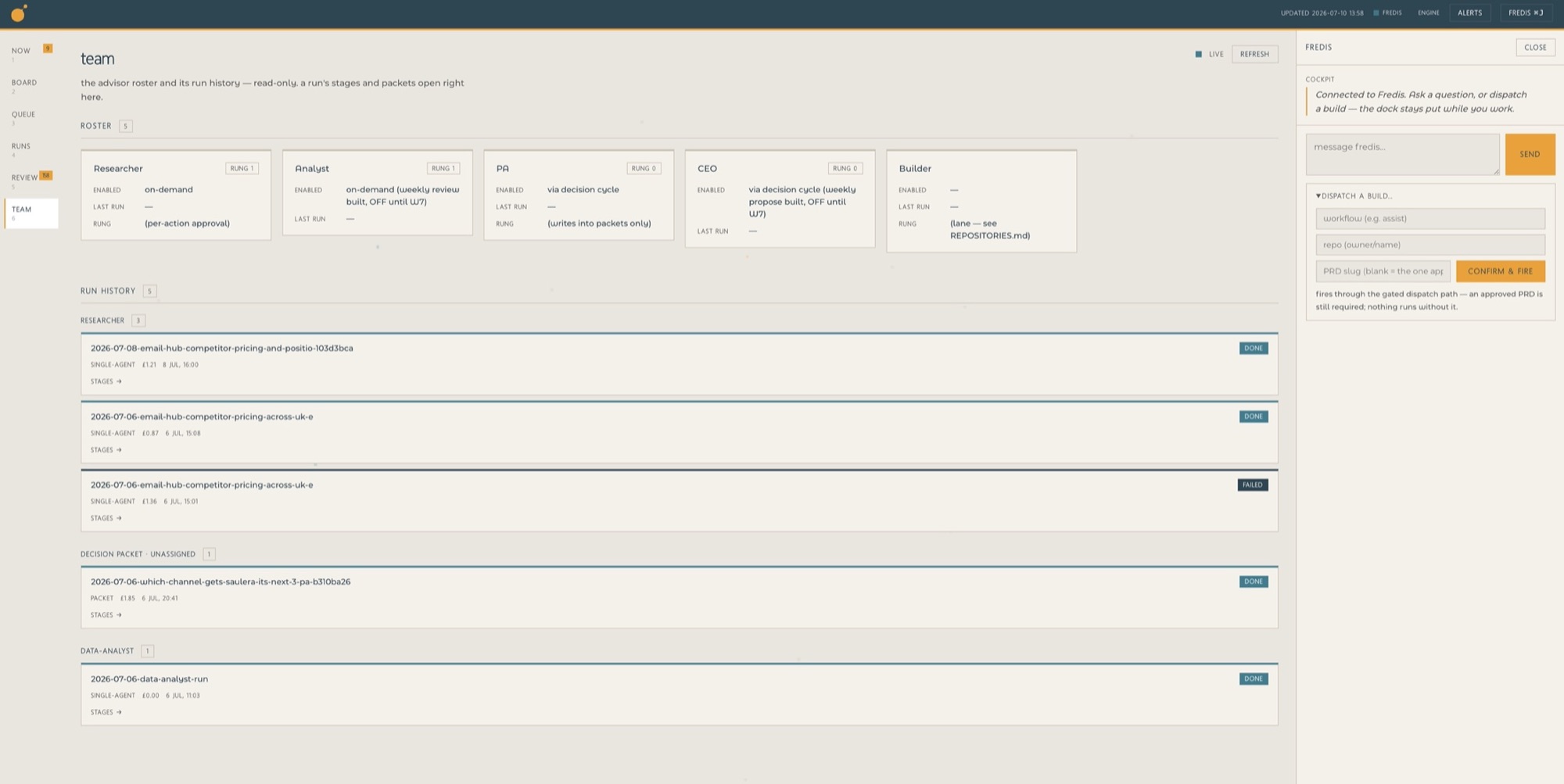
Private, and in daily use across nine repos. What can be shown is the owner console above; the contents (my inbox, my clients, my notes) stay out of frame. Ask me for the walkthrough and I will run it live.
The rules matter more than the model. Nearly everything on these screens is a limit: an approval gate, a rung, one session lane, a PRD before any build. Those limits are what let one person hand real work to a team of agents and still own every outcome.